When homeowners notice pests indoors, the natural assumption is that the problem began inside the house. In many cases, that is not really what happened. Around Greater Baton Rouge homes, the real pest problem often starts outside first. It begins in the yard, around the foundation, near gutters, under damp debris, beside overgrown vegetation, or at small exterior openings that slowly become easy access points. By the time activity becomes visible indoors, the conditions supporting it may already be established around the property. That is why the smartest homeowner response usually starts with the outside of the home rather than the room where the pests were first seen.
Why Outdoor Conditions Matter More Than Many Homeowners Expect
Most households think about pests in terms of the places where they become annoying. Ants appear in the kitchen. Roaches show up in bathrooms or laundry areas. Mosquitoes become obvious during outdoor time. But those visible moments often come late in the process. The larger story is usually about what has been happening beyond the walls. Moisture, shelter, breeding opportunities, food sources, and access draw pests. Those things are often created outdoors first, especially in a region where humidity, rainfall, and vegetation work together to make homes more vulnerable over time.
This is one reason seasonal pest pressure feels harder to control once it becomes obvious. Homeowners are reacting to what they can see, but the conditions that allowed the issue to grow may have been developing outside for days or weeks. That does not mean interior treatment is unimportant. It means prevention usually works best when the property’s exterior is part of the strategy from the beginning.
Standing Water Is Often the First Warning Sign
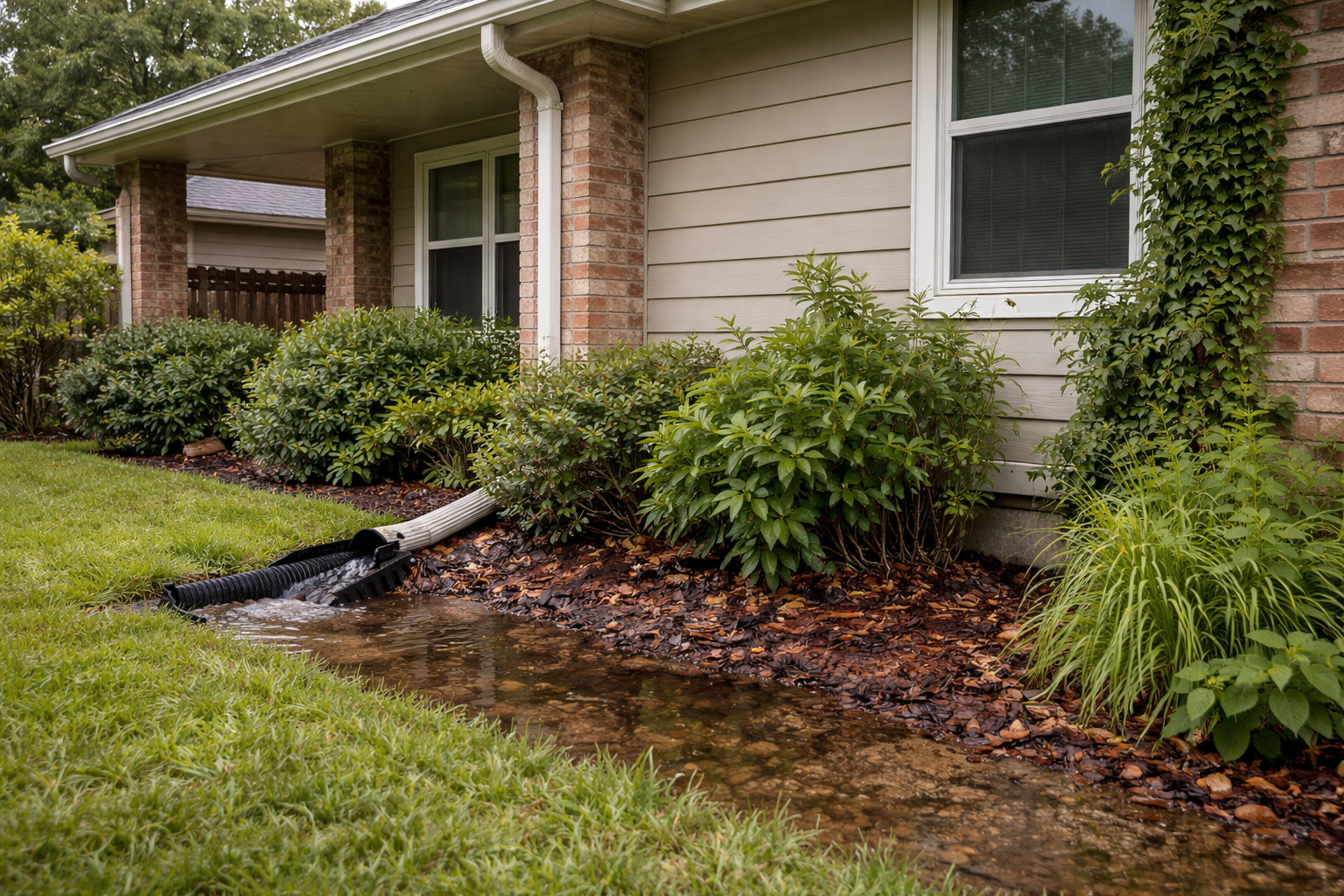
One of the clearest examples of an outside-first problem is standing water. Water that collects in clogged gutters, flower pots, toys, tarps, low spots in the yard, or neglected containers creates ideal breeding conditions for mosquitoes and contributes to broader pest pressure around the home. Homeowners may think of these as minor maintenance issues, but they can quietly make the property much more attractive to insects long before the problem feels urgent.
Louisiana health guidance has repeatedly emphasized the importance of reducing standing water around homes because mosquito pressure rises quickly when breeding sites are left in place. The Louisiana Department of Health’s West Nile virus prevention guidance emphasizes removing standing water and reducing breeding areas around the home. That advice matters because it shows how much pest prevention begins with outdoor housekeeping before insects become a daily nuisance.
Vegetation and Perimeter Conditions Shape Indoor Risk
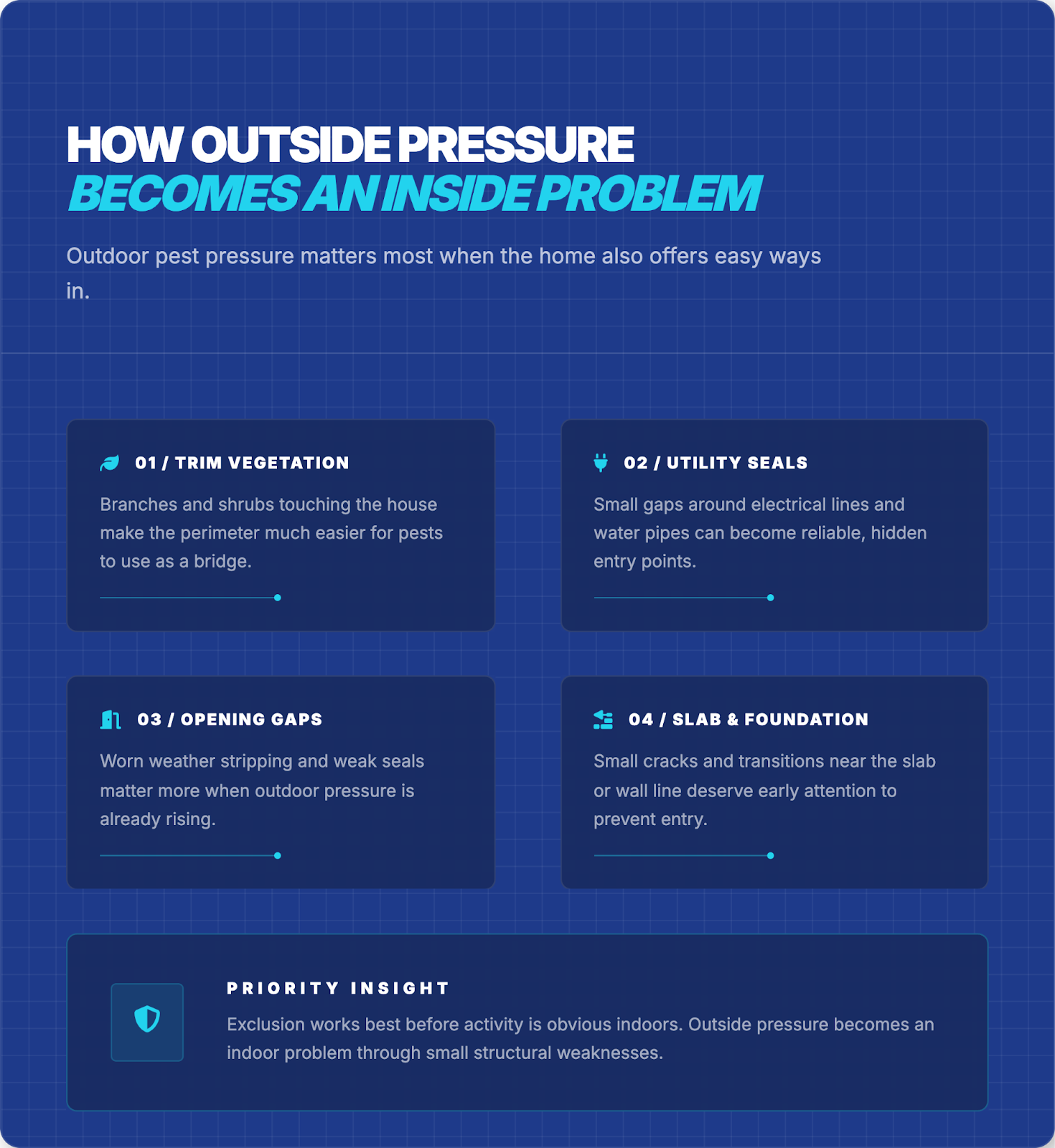
The home’s perimeter often tells the real story about why pests begin moving closer. Shrubs touching the structure, dense mulch against the foundation, stacked materials, damp leaf buildup, and cluttered property edges can all create cover and travel paths. These conditions are easy to overlook because they tend to build gradually. Yet they make it easier for insects and other pests to live close to the house and eventually test ways to enter it.
Homeowners sometimes treat landscaping and pest prevention as separate issues, but in practice, they overlap constantly. The more tightly vegetation presses against the house, the more difficult it becomes to keep the perimeter dry, visible, and less attractive to pests. Seasonal yard growth can quietly increase pressure without any dramatic change that immediately draws attention. That is why exterior conditions deserve close attention before indoor activity rises.
Moisture Around the Structure Usually Comes Before Indoor Activity
Moisture remains one of the strongest common denominators in recurring household pest problems. Damp areas around the home’s exterior, poor drainage, leaky outdoor fixtures, and soft soil near the foundation can all contribute to a more pest-friendly environment. These issues do not always look severe, which is one reason they often go unaddressed until something starts showing up inside. But pests do not need dramatic conditions. They need favorable ones.
That is especially true in the Baton Rouge area, where warm, humid conditions can make small moisture problems seem more significant than they might be in a drier region. A homeowner may focus on the first ant trail or roach sighting while the deeper issue is really water and shelter outside. If that outdoor pattern is not corrected, indoor activity may keep returning even when the visible problem seems temporarily reduced.
Exterior Entry Points Turn Outside Pressure Into Inside Problems
Even when pest activity begins outside, the home still needs an accessible route for that pressure to move indoors. Small openings under doors, gaps around utility penetrations, worn weather stripping, cracks in foundations, and weak seals around windows are often what turn a perimeter issue into a household one. These openings may be easy to miss because they do not look important on their own. But when outdoor pressure is already building, small access points become much more significant.
This is why homeowners benefit from thinking about pest prevention in two layers. The first layer is reducing what draws pests to the property. The second is limiting how easily they can enter once they are nearby. Waiting until pests are visible indoors usually means both layers are already under strain. Prevention works better when external conditions and entry points are addressed earlier.
Greater Baton Rouge Homeowners Are Starting to Think More Seasonally
A recent local article, “Why Seasonal Pest Pressure Is Becoming a Bigger Homeowner Concern Across Greater Baton Rouge,” framed this issue as part of a broader seasonal pattern. Its central point was that local homeowners are increasingly recognizing pest activity as a recurring condition tied to weather, moisture, and timing rather than a one-time nuisance. That framing is useful because it helps explain why so many problems seem to begin outside first. Seasonal pressure builds around the home before it becomes visible inside.
That seasonal view also helps homeowners make better decisions. Instead of treating each pest sighting as an isolated surprise, families can begin asking what the property is signaling. Is water collecting somewhere? Has vegetation crept too close? Are gutters draining correctly? Are there exterior cracks or gaps that need attention? These questions put the focus where it often belongs: outside, before the indoor issue becomes more established.
Why Local Service Often Enters the Picture After Exterior Pressure Builds
There is a point when homeowners realize that ordinary maintenance is no longer enough to stay ahead of what is happening. When seasonal pressure becomes recurring or harder to manage, people often start looking for local support to address active pest issues and help reduce recurring problems. A local example appears in this Walker pest control service overview, which reflects the type of help homeowners often consider once exterior pest pressure begins to cross into the house more often.
What matters most at that stage is understanding that service works best when paired with attention to the external conditions that drove the problem in the first place. If the yard, moisture conditions, and entry points remain favorable, the home may continue experiencing pressure even after visible activity has been addressed.
Louisiana Guidance Reinforces the Outside-First Logic
Broader Louisiana guidance supports the idea that prevention begins around the property before it becomes an indoor response. The LSU AgCenter household insect guide reflects how common Louisiana pests are often tied to environmental conditions and recurring household vulnerabilities rather than random appearance. That matters because it reinforces a practical lesson for homeowners: pest problems are usually easier to influence earlier and outside than later and inside.
When homeowners think this way, pest prevention becomes less reactive. It starts looking more like seasonal property management, where water, perimeter conditions, access points, and yard maintenance all contribute to how much pressure the home will face next.
Conclusion
The real pest problem around Baton Rouge homes is often outside first because the conditions that attract and support pests usually develop around the property before activity becomes obvious indoors. Standing water, perimeter moisture, vegetation contact, and small exterior openings all make the home easier to approach and easier to enter. For homeowners, that means the smartest prevention mindset starts at the foundation, yard, gutters, and outer edges of the house. By the time pests are clearly visible inside, the outside story has often been unfolding for a while.