If you’ve spent any time shopping for new windows, you’ve probably seen the term Low-E thrown around constantly. It shows up on spec sheets, in sales pitches, and on ENERGY STAR certification labels. But most homeowners don’t actually know what it means or why it matters. This post breaks it down in plain terms so you can make a smarter decision when it counts.
What Low-E Actually Means
Low-E stands for low emissivity. Emissivity is a measure of how readily a surface radiates heat. A high-emissivity surface — like ordinary clear glass — allows heat to pass through it easily in both directions. A low-emissivity surface resists that transfer, bouncing heat back toward its source instead of letting it bleed through.
In practical terms, Low-E glass has a microscopically thin reflective coating applied to one of its surfaces. That coating is invisible to the naked eye and doesn’t meaningfully affect how much light comes through. What it does affect is how much infrared heat passes through — and the difference is significant.
The Problem Low-E Glass Solves
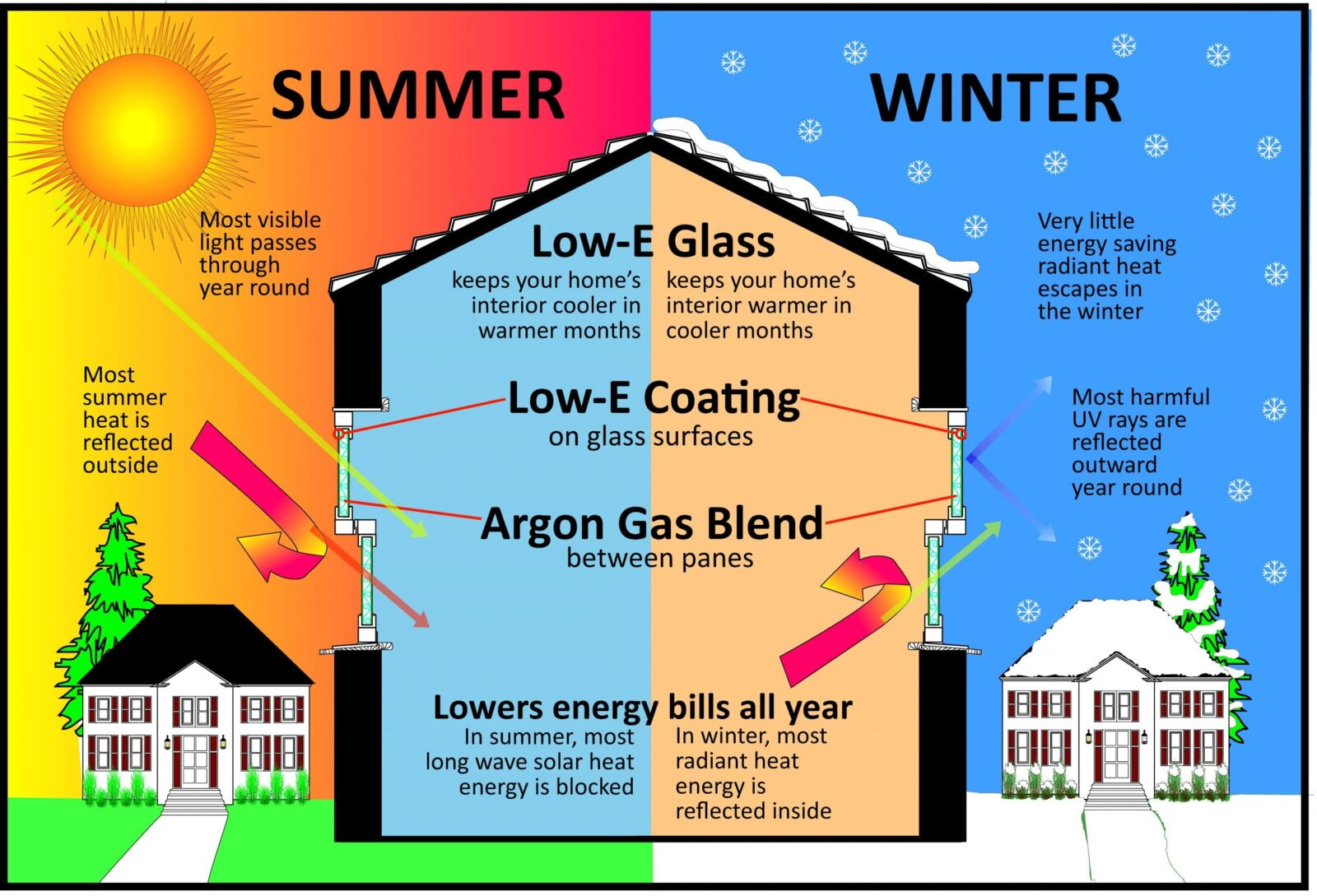
To understand why Low-E matters, you first need to understand what happens with regular glass. In winter, the warm air inside your home radiates heat toward the cold window glass, and that heat passes straight through to the outside. Your furnace runs harder to compensate. In summer, solar radiation passes through the glass and heats up your interior, sending your AC into overdrive.
Standard double-pane windows help with this compared to single-pane, but they don’t solve it. Low-E coatings take the performance of insulated glass significantly further by actively reflecting radiant heat rather than just slowing conduction through the air gap between panes.
How It Works in Winter vs. Summer
This is where it gets a little more nuanced, because Low-E glass isn’t one-size-fits-all. There are different types of Low-E coatings designed for different priorities.
In colder climates, you generally want a coating that lets solar heat in during the day — passive solar gain — while still blocking heat from escaping at night. This is sometimes called a “soft coat” or passive Low-E coating, and it’s designed to maximize heat retention.
In warmer climates, the priority flips. You want a coating that blocks solar heat gain from coming in during summer while still letting visible light through. This is sometimes called a “hard coat” or solar control Low-E, and it’s better suited to climates where cooling costs are the bigger concern.
In mixed climates — which covers a large portion of the country — the right choice is somewhere in between, which is why it’s worth talking to a knowledgeable local dealer who understands the specific demands of your region.
The UV Protection Bonus
One of the less-talked-about benefits of Low-E glass is what it does to ultraviolet radiation. UV light is what causes flooring, furniture, curtains, and rugs to fade over time. Low-E coatings block a significant portion of UV rays without reducing visible light transmission in any noticeable way.
If you’ve ever watched a wood floor fade in the spot where afternoon sun hits it every day, that’s UV damage in action. Low-E glass slows that process considerably, which protects your interior finishes and furnishings over the long run. For a deeper look at exactly how this technology works and what makes it different from standard insulated glass, this Low-E insulation technology page explains the mechanics clearly.
Low-E and Condensation
Another underrated benefit is reduced condensation. When interior glass surfaces stay warmer — which Low-E coatings help achieve by reflecting heat back into the room — the risk of condensation forming on the inside of the glass drops. Condensation on windows isn’t just annoying; over time it can damage window frames, sills, and surrounding drywall. Reducing it is a real practical benefit, especially in humid climates or homes with high indoor moisture levels.
What to Look for When Buying
Not all Low-E glass performs the same, and the coating is only part of the equation. The full glass package matters — the number of panes, the type of gas fill between them, and the spacer system that holds the unit together all affect total performance.
When comparing windows, look for the U-factor and Solar Heat Gain Coefficient on the label. The U-factor tells you how well the window resists heat loss — lower is better. The SHGC tells you how much solar heat the window lets in — whether you want that higher or lower depends on your climate. ENERGY STAR certification means the window has been independently verified to meet performance standards for your specific climate zone, which takes the guesswork out of it.
For a full breakdown of how to read these ratings and what they mean for your home’s energy performance, this window energy efficiency and tax credit resource is worth bookmarking before you start comparing quotes.
Is Low-E Glass Worth the Extra Cost?
In almost every case, yes. The price difference between standard insulated glass and a quality Low-E package is relatively modest compared to the total cost of window replacement, and the performance difference is substantial. Lower heating and cooling costs, better indoor comfort, UV protection for your interiors, and reduced condensation are all real, ongoing benefits that add up over the lifespan of the window.
When you’re already spending money on new windows, skipping the Low-E upgrade to save a small amount upfront is one of the few decisions that’s hard to justify. The payback period is short and the benefits last for decades.
The Takeaway
Low-E glass is one of the most impactful technologies in modern window manufacturing, and it’s now standard in quality window packages for good reason. It keeps heat where you want it, blocks UV damage, reduces condensation risk, and works in both directions depending on the season. If you’re replacing your windows and Low-E isn’t part of the conversation, it should be.