The mushroom dates a long way back into human history and has been used for different purposes over the centuries. Mushrooms were thought to have spiritual properties: this is indicated by the translation of some hieroglyphic writings in which Pharaohs of ancient Egypt stated that eating mushrooms could bring about immortality. The mushroom has also been used for its psychedelic properties: you might be aware of Shamans’ use of certain ‘magic’ mushrooms during tribal rites to create trance states in people to experience altered realities, ostensibly in pursuit of “enlightenment.” Medicinally speaking, mushrooms have been shown to benefit the immune system enormously. Finally, as a dietary addition, many of our cultures have developed a robust taste for mushrooms.
The healing history if mushrooms
Beyond its purported magical properties, the mushroom has had much more of a popular attraction as a healing substance than as a mind-altering one. This is particularly true of China and Japan, two countries that have a solid history and ancient ties with using mushrooms for medicinal purposes, and which have led the world research in bringing attention to the ability of mushrooms to help one maintain a healthy body balance.
For 3,000 years, the Chinese have looked to the mushroom for its healing powers. Shen Noug’s Herbal, the first and prototypical book on medicinal herbs in China, written between 100 and 200 AD, speaks about several mushrooms and their unique medicinal properties. During the Ming dynasty, over 1,500 years later, a compendium of the Materia Medica listed over 20 species of healing mushrooms. According to a more recent study (Ying et al., 1987), there are at least 270 species of mushrooms with actual medicinal properties.
The Japanese have also been fascinated with the medicinal value of mushrooms and have been looking into their healing properties for centuries, so it is fitting that many modern day discoveries regarding the medicinal application of mushrooms have been pioneered by them.
What are the nutritional properties of mushrooms?
In a recent study coordinated by lead nutritionist David Haytowitz at the Beltsville Human Nutrition Research Center (BHNRC), seven varieties of edible mushrooms (White Button, Oyster, Shiitake, Enoki, Portobello, Crimini and Maitake) were analysed to create a unique nutrient profile for each. In order to get a nationally representative sample, mushrooms were collected from retail outlets around the country. The mushroom varieties were analysed for fat, fiber, protein, carbohydrate, vitamin and mineral content. While most varieties were analyzed raw, White Button Mushrooms, which are commonly used in recipes, were also analyzed after stir-frying and microwaving in order to gauge the levels of nutrients retained after cooking. Adding to existing data, Portobello Mushrooms were analyzed after grilling and Shiitake mushrooms were analyzed after stir-frying.
It was found that most nutrients are fully retained when cooked, while other nutrients are retained at between 80-95 % of their levels in raw mushrooms. Even though mushrooms are not often thought of as a significant source of nutrients, they are both a phytonutrient and vitamin rich food.
All of the mushrooms tested contained a significant amount of copper. Each cup of stir-fried White Button Mushrooms provides 0.3 milligram of copper, which is about one-third of the recommended daily intake for adults. Copper helps the body produce red blood cells and drives a variety of bio chemical reactions that are essential to human health.
Mushrooms also had a significant amount of potassium, a mineral that helps the body maintain normal heart rhythm, fluid balance and muscle and nerve function. Two-thirds of a cup of sliced, grilled Portobello Mushrooms contains the same amount of potassium as a medium-sized banana. For juicing enthusiasts, a few mushrooms tossed into the mix can only enhance what is already nature’s best source of liquid vitamins.
Even the most edible and the most cultivated mushrooms provide a cornucopia of medicinal possibilities and have clearly captured the attention of Western science. Let’s look at the properties of some types of mushrooms in m ore detail.
Antioxidant White Button Mushrooms
The White Button Mushroom (Agaricus bisporus) is a domesticated mushroom that has been deliberately bred to have a uniform button top and a slender stem. The larger Crimini and even larger Portobello mushrooms actually represent different growth stages of the Agaricus bisporus. Consumer’s demand is largely for the cap so the breeding design has had a strictly commercial purpose. It is the most widely cultivated mushroom. According to mushroomexpert.com, “It is cultivated by mushroom farmers to the tune of $800 million each year, during which the average American consumes 2.2 pounds of mushrooms per year”.
Even thought the Agaricus bisporus does not have the solid nutritional and medicinal reputation of other varieties, according to the Journal of the Science of Food and Agriculture, it possesses as powerful antioxidant properties as the renowned Maitake and the Matsutake mushrooms, which are widely known for their ability to help build the immune system.
Relaxing Oyster Mushroom
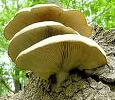
The Oyster Mushroom (Pleurotus ostreatus) is also quite popular. These mushrooms are uniquely distinctive and do look like oysters. They have white gills decorating their short little stems and are found in clumps and invariably growing on wood in the wild. The Oyster Mushroom can be made into a soup, cooked with a variety of foods, used in a mushroom kebab, or tossed into a salad. Traditional Chinese medicine has used these exotic looking mushrooms for joint health and muscle relaxation. These mushrooms are said to be high in iron and are classified by herbalists as natural blood builders. Even natural vitamin supplements fall short of the nutritious whole food properties of this often forgotten mushroom.
Energy-giving Shitake Mushrooms
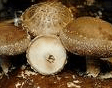
The Shitake mushroom (Lentinula edodes) is often found on logs and oaks in forests and is also known as the oak mushroom. In agricultural milieus, it is grown on synthetic logs, sawdust or other usable forms of agricultural waste. The Shitake mushroom accounts for 10% of the world’s crop of mushrooms. In traditional oriental medicine, there are a wide variety of uses for this mushroom, including its beneficial effect on the functioning of the liver, its regeneration powers, its ability to boost chi (vital biological energy), and its retardation of premature ageing.
With modern medicine’s help, this mushroom has taken on a kind of medicinal renaissance after the successful antitumor research developed in the late 60’s at Purdue University by Tetsuro Ikekawa in collaboration with the National Cancer Center Research Institute (Tokyo). Current science is focusing not only on its cancer fighting properties but on substances isolated from the Shitake mushroom that appear to address heart disease and AIDS. The anti-tumor factor continues to be researched.
Immune-boosting Enoki Mushrooms

The Enoki mushroom harbors the polysaccharide flammulin, which Japanese and Chinese medical researchers claim to have shown anti-tumor/anti-cancer properties. It should be noted that Nagano, the heart of Enoki agriculture in Japan, has a very low rate of cancer. The Enoki is said to be anti-viral, anti-bacteriological thereby providing a powerful immunological boost and it has been shown to have particularly positive effects in the treatment of prostate cancer and lymphoma.
Reishi Mushroom

One of the most renowned types of mushroom is the Reishi (Ganoderma lucidum), which is referred to as the “ten thousand year old mushroom” by the Japanese and as ling-zhi by the Chinese, meaning the “mushroom of immortality.” The Reishi has been evaluated in a variety of studies where it was found to have a positive affect on retinal pigmentary degeneration, neurasthenia, insomnia, duodenal ulcers, hepatitis and muscular dystrophy. In addition, the Reishi mushroom has pro-immune and anti-cancer properties (Chang & But, 1986; Chang et al, 1984; Huidi & Zhiyuan, 1982). The Reishi mushroom has also been found to be rich in immune system stimulating polysaccharides, triterpenoids and specialized proteins that have stimulating effects on immune system function. The therapeutic action of Reishi mushrooms as an anti-cancer and anti-inflammatory agent has been associated with its immuno-modulating properties (Wang et al., 1977).
The promising research regarding these specialized members of the plant kingdom has led to a wave of brand new whole food supplements targeting both immunity and overall health.
Six Ways Mushrooms Can Save the World
Watch Paul Stamets share his fascinating journey about mushrooms ability to heal our world. This video is eighteen minutes long, but really illustrates the brilliant nature of mushrooms and how they offer humanity amazing opportunities to help humans and the planet. Paul shares the story of how giant mushrooms once grew on earth for ten’s of millions of years. The mycelium in mushrooms is key and this informational explanation offers a map on how mushrooms are also vital for human health. Enjoy!